
Holiday club research 2026
School’s out for summer. And so are holiday clubs.
Research exposing the holiday gap for disabled children.
School holidays should be a time for fun, friends and making memories. Instead, for too many families with disabled children, they’re a source of stress and worry.
Parents tell us every day how hard it is to find holiday clubs or childcare that can meet their child’s needs.
We carried out research to reveal the scale of the problem and make the case for change.
What did we find?
- 61,415 disabled children live in areas with no holiday club options. One in ten (10%) local authorities commission no holiday clubs at all for disabled children. These areas are home to over 60,000 disabled children facing school holidays without any support.
- Only 6% of disabled children receive holiday support, showing a vast gap in provision nationally. In the local authorities that responded, 76,623 disabled children were listed as receiving holiday club support. This is just 6% of the 1,274,035 disabled children aged 0–18 living in these areas.
- Disabled children are being routinely excluded. More than half (57%) of parent carers said they struggle to find accessible holiday clubs. More than a quarter (27%) said clubs or activities are unwilling to even include their disabled child.
- Support from local authorities is patchy and inconsistent. Nearly half (49%) of parent carers told us their local authority won’t fund holiday club provision for their disabled child. Only 34% told us that their local authority provides clear information about accessible holiday clubs in their area.
Why does this matter?
- Disabled children are missing out. Nearly half of parent carers (49%) told us that holiday clubs help their child to build confidence. 42% said they help their child make friends and 21% said they help their child transition easier back into school.
- Families are paying the price. One in three parent carers said the lack of accessible holiday clubs has left them financially worse off. Of those affected financially, one in five has been forced to leave work altogether.
- Parents are reaching breaking point. More than a third (34%) said the struggle to find suitable holiday activities has negatively affected their mental health.
Visual transcript
Over half of parents of disabled children say holiday clubs are hard for their child to access.
An orange and purple pie chart on the screen shows 57%.
One third said a lack of accessible clubs has put pressure on their family finances.
An orange box with 32 pound signs is on screen. Just over ten of the pound signs are coloured purple, while the rest remain orange, showing 32%.
More than a third said difficulty accessing holiday clubs has increased stress or burnout.
An icon of a person who is stressed with their arms in the air moves upwards in a bar chart, showing 39%.
38% said difficulty accessing holiday clubs had a negative impact on the mental health of their child.
A donut chart shows 38% in purple, the rest remains orange.
What needs to change?
No child should miss out on the joy of the school holidays. But our research shows that’s exactly what’s happening. Whether a disabled child can access holiday activities often depends on where they live, not what they need.
Every disabled child has the right to be assessed for children’s social care support. If a child is assessed as needing extra support, their social care funding can help pay for things like holiday clubs, short breaks, personal assistants or direct payments. But in reality, families face a postcode lottery, with local authorities interpreting the rules differently and offering very different levels of support.
This isn’t fair, and it isn’t what the law intended.
While the Government is rightly focusing on improving support for disabled children in school through its SEND reforms, children’s lives don’t just happen inside the classroom. This is where strengthening children’s social care becomes critical for children’s futures.
The problem isn’t new. In 2024, the Law Commission concluded that the law governing disabled children’s social care is fragmented, confusing and inconsistent. It recommended a new national framework so families can expect the same support wherever they live. The Government now has a critical opportunity, and a responsibility, to act.
Melissa’s story
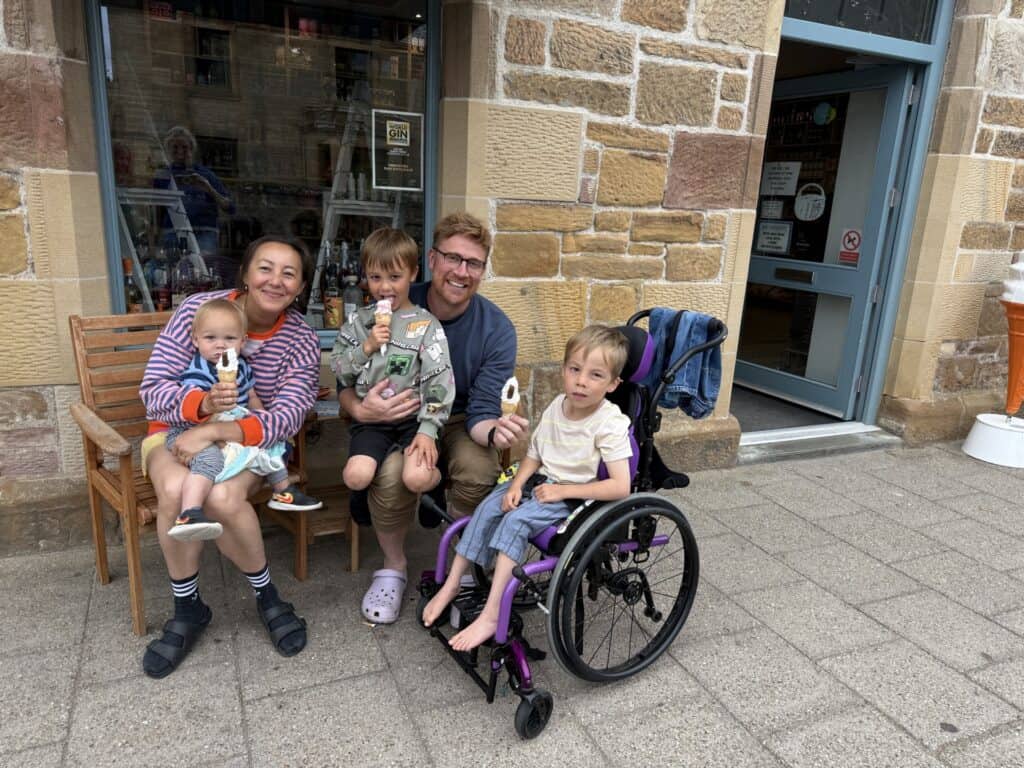
“The logistics of organising summer holiday childcare are so complicated when you have a disabled child – it exhausts me mentally.
“You have to find something unsuitable for Frankie and think of ways we can make it suitable, which always comes with huge added costs. Or call upon favours with family or friends. Or take unpaid leave from work.
“What makes it more frustrating is how different support can be depending on where you live. I know families in neighbouring boroughs who receive funded personal support assistant hours every week for children with similar needs to Frankie”
We’re calling for:
- An end to the postcode lottery. Implement the Law Commission’s recommendations by introducing a new national framework, with clear statutory guidance and national eligibility criteria for disabled children’s social care.
- Enough holiday activities for every disabled child. Every local authority should commission sufficient inclusive and specialist holiday clubs to meet local need.
- Support without a fight. Families shouldn’t have to battle the system to access holiday clubs, short breaks or the childcare that their child needs.
- A workforce that can deliver. Invest in personal assistants, support workers and holiday club staff so disabled children can access the support they’re entitled to.
- A fairer funding system. Review direct payments so they reflect the real cost of holiday provision and give families more flexibility to combine budgets and arrange the right support.
Lissi’s story

“Nobody really tells you what support exists. Everything we’ve received has been because we’ve gone out and found it ourselves.
“There seems to be no consistency. I know families with children very similar to Matthew who receive support that we don’t qualify for.”
How we carried out this research
- We contacted every local authority in England to find out what holiday clubs and activities they provide for disabled children. Of the 152 local authorities contacted, 114 responded.
- We analysed the information they shared, recognising that there is no consistent national definition of what counts as a holiday club so there is likely to be some variation in the quality of this data. This variation is itself evidence of the inconsistent way support is planned and delivered across the country.
- To support these findings we also commissioned independent polling of 1,000 parent carers to understand families’ experiences. The survey was carried out by Censuswide on behalf of Sense among parents of disabled children under 18, between 2 and 10 June 2026.
- To work out the number of children in local authorities who responded as not having any holiday clubs we used SEND 2025/26 figures for 0-18 year olds from the Department for Education.
Find out more
If you have questions about our research, get in touch: [email protected]
Join us
Be part of the change. Help build a world without limits for every disabled person with complex needs.
By signing up to our weekly emails, we’ll let you know more about our work and other ways you can help, including how you can volunteer, make a donation, or support our campaigns.