
Why the school holidays are so challenging for families with disabled children like mine

Lissi is the mother of Matthew, a kind-hearted young boy who is fabulous at reading and maths and a lover of Spider-Man and Mario.
But as a full-time parent carer, Lissi is constantly fighting for the support her family needs, especially during the school holidays when that support can be hardest to find.
Our recent research reveals the scale of the challenge:
- 61,415 disabled children live in areas with no holiday club provision at all.
- Only 6% of disabled children receive holiday support, highlighting a huge national gap in provision.
- 57% of parent carers struggle to find accessible holiday clubs, while 27% say activities are unwilling to include their disabled child.
Lissi shares her story…

Matthew
Matthew started talking at eight and a half months and honestly hasn’t stopped since.
He’s outstandingly intelligent. He’s a fabulous reader and brilliant at maths.
One of his favourite things to do is ask me maths questions while I’m driving. He’ll ask me something like “What’s 18 times 3?” and I’d better know the answer because if I don’t, he’ll get out his little Mario calculator and check it himself.
Over the years, he’s had different interests. First, it was space. Right now we’re really into Mario and Spider-Man. He can tell you every Mario character and exactly when each power-up first appeared in games. His mind is fabulous.
What stands out to me most, though, is how kind he is.
One of the first independent things I remember him doing was seeing a little girl fall over at nursery. We always keep emergency chocolate in the car because transitions can be really difficult for him. He saw her crying and said, “I think we should offer her some of our chocolate.” I thought, “Yeah, dude, I think we should.”
Matthew has some amazing qualities, but he also has a lot of struggles.
He turns six next week. He’s autistic with a very strong PDA profile. Not many people know much about PDA, but it’s Pathological Demand Avoidance. Matthew is also epileptic.
He’s a very anxious child. He doesn’t do busy, he doesn’t do loud, and he doesn’t do unpredictable. We stick to quite a rigid routine because that’s what helps him feel safe.
Fighting for a diagnosis and the right support
The road to diagnosis wasn’t straightforward. We first raised concerns because he was eating non-food items, like paper or dirt. We paid privately to see a paediatrician, and were told he probably wasn’t autistic because he was verbal and made eye contact.
Looking back, I wish I’d trusted my instincts sooner.
Eventually, I sat down and wrote a huge list of all the reasons I thought Matthew was autistic and handed it to a doctor at an NHS appointment. She took one look and said, “Let’s put the referral in.”
By the time Matthew received his diagnosis, we already knew.
I thought I would feel different. Instead, it was over a Teams call where they told us Matthew met the criteria for autism and that they had never had a child score so highly for PDA.
Then that was kind of it.
The report was actually one of the hardest things I’ve ever read. It focused almost entirely on what Matthew couldn’t do. There was a whole section about my mental health history. I remember thinking that we’re a hugely neurodivergent-affirming household.
I remember one woman crouching down to Matthew when he was only about three and a half and saying, “Being autistic isn’t an excuse for being a horrible child.”
But autism isn’t something we’re ashamed of. If you walked into our house, you’d see that immediately. We have a sign that says, “Welcome, it’s very neurodivergent in here.”
We have a permanent dark tent in the living room, a spinning chair, a peanut ball and a yoga ball. We make curry for breakfast at five o’clock in the morning because that’s Matthew’s routine.

Matthew once asked me if his stepdad, Martin, was autistic. I said, “No mate, but we do love him anyway.” We’re definitely the majority in this house.
School and education
School was another battle. He was rejected by 29 schools.
I ended up going to a tribunal to secure the right placement. At one point, I felt so desperate that I bypassed the local authority entirely and contacted the school I wanted directly. I turned up with folders full of reports, assessments and paperwork and basically begged them to meet him. Thankfully, they did.
Matthew is now in a specialist school, and the difference has been incredible. We’ve seen a real positive turnaround in both his behaviour and his wellbeing.
We fought like hell to get him there, but it was worth it.
Becoming a full-time carer
Before Matthew, I worked as a children’s intensive care nurse. Nursing was all I’d ever done. I qualified at 21 and loved it. I loved the crash bleeps, I loved my patients, and I loved their families.
The difficulties started when we were trying to find childcare.
We tried nurseries and specialist settings, but nothing really worked. Some places couldn’t manage him safely. Others didn’t understand PDA at all.
Eventually, I gave up nursing because there wasn’t suitable childcare available.
I formally came off the nursing register last year and that was a massive moment for me.
I’m still paying student loans for a degree that I don’t use. I never thought I’d be on benefits.
It’s not where you imagine you’ll end up when you’ve worked your whole life and built a career.
I still miss nursing enormously. Some days I miss it more than others. But what I’ve learned over the last six years has changed me, too.
If I did go back to work one day, I’d want to use my experience to support families like ours.
I currently volunteer with a charity supporting families with disabled children, and I love being able to help people who are in the same place I was a few years ago, desperately Googling what to do with my autistic child.
Lack of support
Every day we drive past a mainstream school, it has a big sign advertising wraparound care available from 7.45 to 5.30. And I’m like, “What?!”
We couldn’t even dream of that. Our school – it’s literally nine till three every day, except for Friday. Friday, they finish at half one, and that is it.
We don’t get short break support or Personal Assistance (PA) hours.
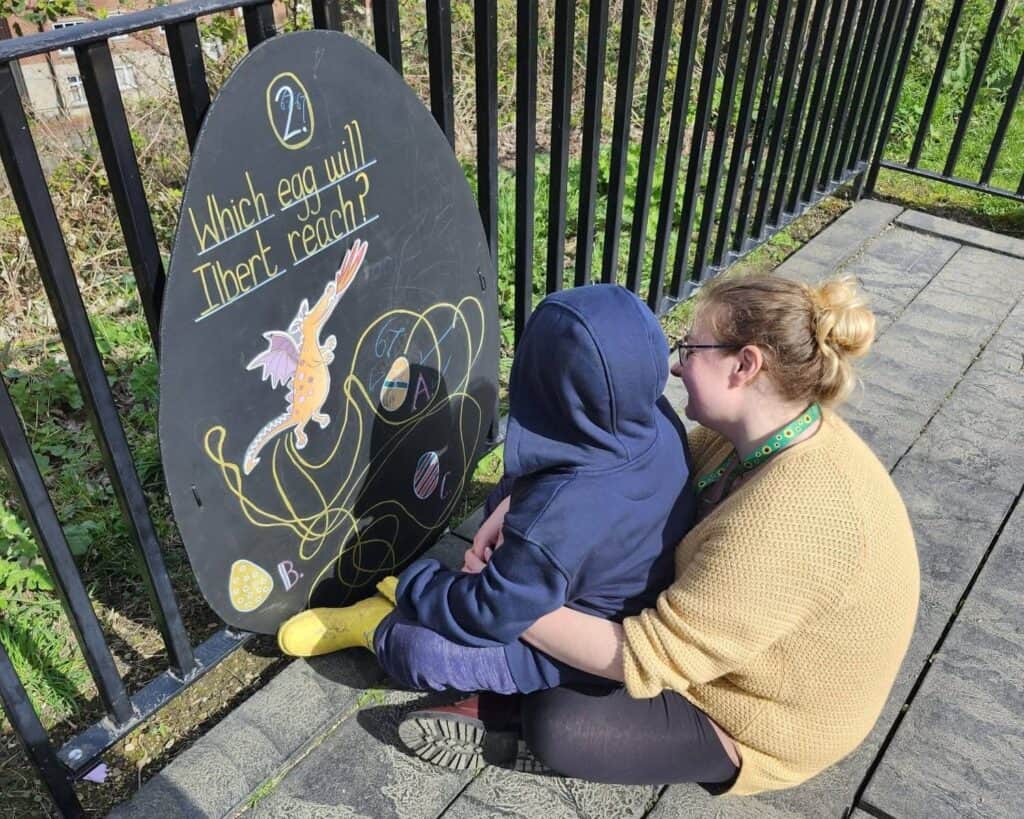
We’ve been told we don’t meet the threshold because Matthew is verbal. I’ve called social services myself in the past when we went through a really tough patch. I remember saying, “We’re not okay,” and still being told we didn’t meet the threshold.
Because Matthew’s verbal, we’re often shot down. As we were told, “Matthew doesn’t need that level of support.” I’m like, “Are you serious? Matthew is in a classroom by himself with just one teacher. That is the level.”
We don’t have grandparents or anything like that to pop in. I think the combination of his epilepsy and autism – and he’s got allergies – just terrifies everybody.
It’s literally me, his stepdad and his dad. It’s just us three.
What frustrates me is that nobody really tells you what support exists. Everything we’ve received has been because we’ve gone out and found it ourselves.
There seems to be no consistency. I know families with children very similar to Matthew who receive support that we don’t qualify for.
The struggle of navigating school holidays
The school holidays are one of the biggest challenges we face now.
We can’t just wake up one morning and decide to go somewhere.
Planning starts months in advance. I’ve already booked summer activities and started putting plans together. Every outing needs planning.
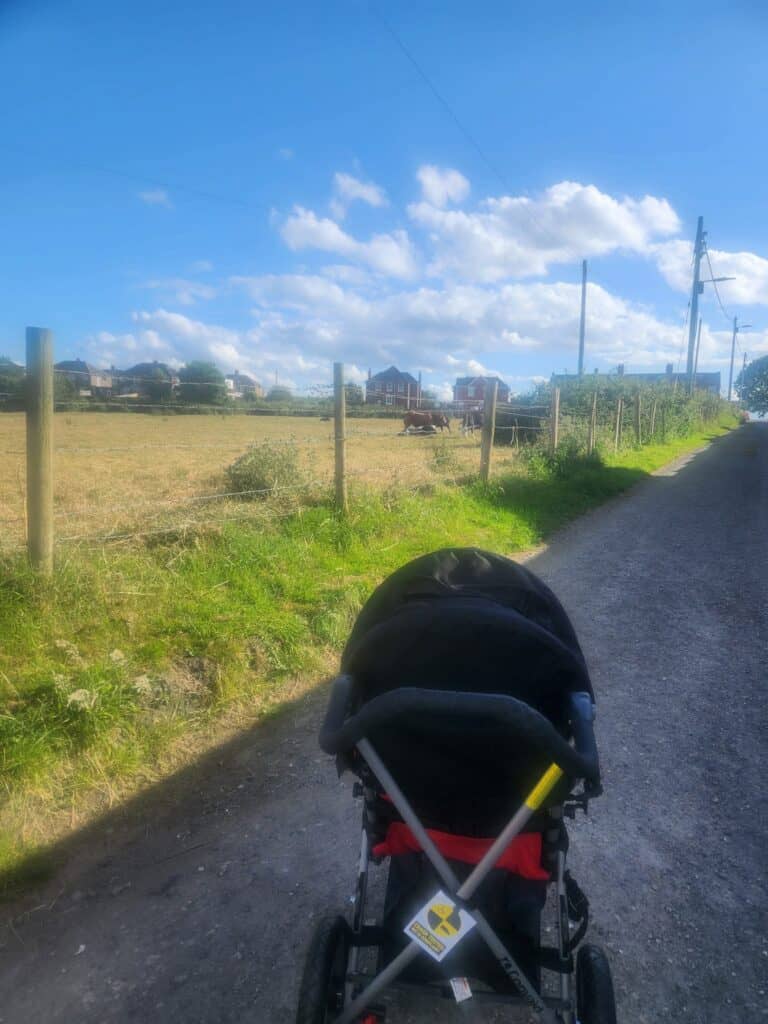
We need to check whether somewhere is wheelchair accessible.
His epilepsy makes him really tired – sometimes, if he has a cluster of seizures, he’s just physically unable to walk. And we also use it like a little safety den if he needs it.
We’ll put the hood up, put ear defenders on, an iPad, a blanket, and he can just hide from the world.
We need to think about food because Matthew won’t eat food when we’re out.
We need spare clothes, sensory equipment, headphones, toys and contingency plans.
We can spend money on tickets, drive somewhere, get into the car park and then realise Matthew can’t cope and has to leave. Every plan has a plan B.
For the summer holidays, we run by a similar plan every year. I have Matthew for the first two weeks, continuously. Then his dad has him for a week. Then I have him for two weeks, continuously. Then his dad has him for a week, and then I have him until he goes back to school.
You might think “only two weeks” in a chunk, but then each day is 14½ hours long. It’s a long day.
We will spend a lot of time in the garden and in the games room, and I’ve tried to find a few SEN events that we can use as little anchor points during the week.
Because I couldn’t just take Matthew to the park, as it would be too loud, he would become very, very deregulated.
If we’re going to go to the park, we’ll go at 7 in the morning or when it’s raining, and nobody is there.
So no, we don’t have childcare. It will be us three all summer.
Family and community
One thing I am incredibly grateful for is the relationship we have as a family.

Matthew spends weekends with his dad, and we work really well together. His dad came to our wedding to help look after Matthew. We all sat together at the top table.
If Matthew wants me when he’s at his dad’s house, I’ll go round for a cup of tea and spend some time with him. We all want what’s best for him.
That support makes a huge difference because caring doesn’t really stop. Even when Matthew is at his dad’s, I’m still thinking about school uniforms, safe foods, appointments, activities and whether everything is ready for the week ahead.
The mental load never really goes away.
What gets us through is community. We’ve built a wonderful network of SEND families. We share information, organise activities together and help support one another.