
Introduction to deafblindness for parents
On this page
- What is deafblindness/MSI?
- Common adjustments for hearing loss
- Common adjustments for sight loss
- Common adjustments for deafblind children and young people
- Communicating with deafblind children and young people
- Behaviours of children and young people with MSI
- Top tips for supporting deafblind children and young people
What is deafblindness?
Our page on deafblindness explains what it is, how to identify deafblindness in young children and the different types.
What is deafblindness?
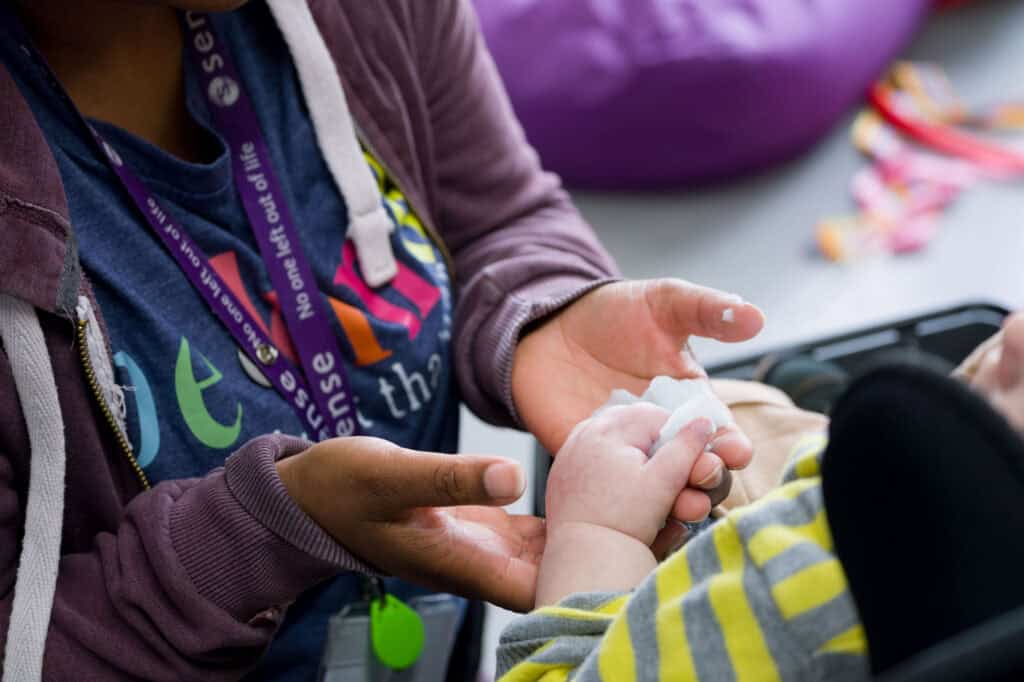
The different types of deafblindness, its causes, diagnosis, signs of deafblindness, treatment and management.
Common adjustments for hearing loss
Children and young people with hearing loss may need many different accommodations or adjustments to make the world accessible.
These might include:
- Use of sign language.
- Hearing aids and other technology.
- Clear speech.
- Ability to see faces for lipreading.
Deafness and hearing loss
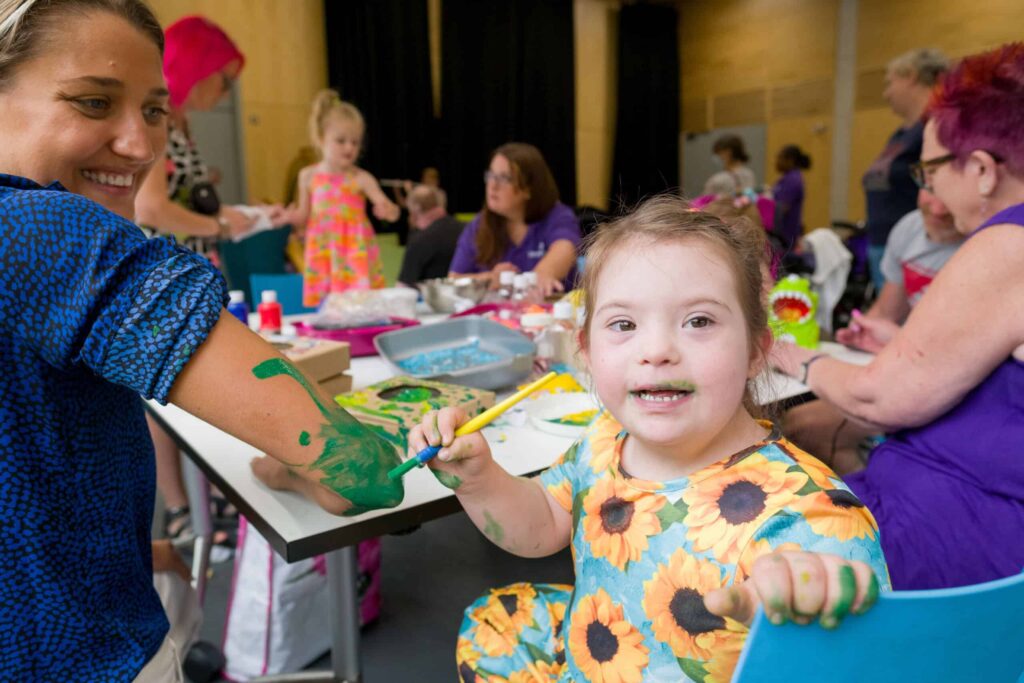
Answering common questions about deafness and hearing loss, including signs of hearing loss in children, information and support.
Common adjustments for sight loss
Children and young people with vision loss may also need many different adjustments to make things more accessible.
These might include:
- Screen readers
- Audio descriptions
- Braille
- Brighter lighting
- Closer positioning
Blindness and visual impairment

Common questions about blindness and visual impairment including what signs of visual impairment to look out for and visual aids available.
Common adjustments for deafblind children and young people
There is already huge variation in what deaf or blind children and young people may need to support them.
For deafblind children and young people, there is even more diversity.
Some adjustments for visual impairment might not be accessible for those who also have a hearing impairment, and vice versa.
For example, some deafblind people can’t use sign language because they can’t see hand movements. But this is not true for everyone.
A different combination of adjustments and communication methods will work for each person. The important thing is to treat every individual as unique.
Some common adjustments include objects of reference and hand-under-hand communication.
Communicating with deafblind children and young people
There are many ways to communicate with deafblind children and young people. Every individual is different.
You can find out more about various methods of communication on the Sense website.
An important reminder
Remember: every child and young person is unique. Their communication will be as individual as they are.
- Communication is not one-size-fits-all.
- You may need to adapt signs for individual use.
- Experiences build language – so use activities as an opportunity to learn.
- Be responsive – that helps build early communication faster.
- There is no timetable for communication – everyone learns at their own pace!
At Sense, some of the ways we communicate with the children and young people usually include:
Total Communication
This means we find and use the right combination of communication methods for each individual person. It’s different for everyone.
For example, one child might use a combination of signing, movement, speech, and technology. And another child might prefer a mixture of touch, objects of reference, and gestures.
By using different communication methods together, they reinforce each other and strengthen meaning.
Objects of reference
Objects of reference are objects that have a particular meaning assigned to them. They can represent anything that words, signs, or symbols can.
They are multi-sensory and should be chosen based on a person’s experience. This makes it easier for them to recognise and attach meaning to.
Touch: a shared language
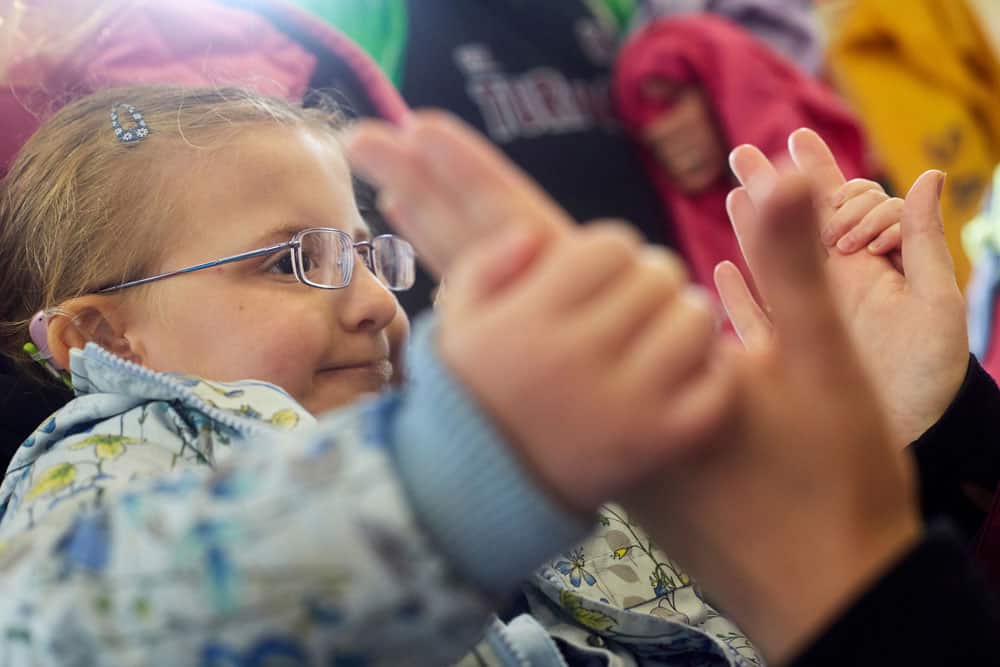
For children and young people who experience sight and hearing differently, touch can become a vital way to connect and understand.
Their hands can become the primary way that they explore the world, communicate and express themselves, and can act as their eyes, ears, and voice.
Hand-under-hand communication
Hand-under-hand means placing your hand underneath theirs, so they can choose to follow what you’re doing. This method of communication puts the child or young person in control.
Unlike hand-over-hand, where you guide someone’s movements, hand-under-hand is built on trust. It allows them to explore at their own pace and decide how they want to engage.
It’s seen as a more respectful way to connect and helps build confidence, independence and communication.
Strategies to develop touch
- Watch what the child or young person does with their hands.
- Provide them with opportunities each day to explore a wide variety of objects.
- Make your hands available to them to be able to tell you something or show you something.
- Play hand games with them. Begin by imitating what they so with their hands.
- Model hand-use for the child or young person as you do things. Use hand-under-hand techniques to show them everyday activities such as opening, closing, and stroking objects.
Allow them plenty of time to explore. It takes longer to learn through touch than vision.
Behaviours of children and young people with MSI
Behaviour is also a form of communication.
For children and young people with MSI, behaviours can clearly show how they’re feeling and what they need. These behaviours could include:
- Pulling their hands away when touched.
- Avoiding touching new things.
. - Reacting strongly, or very little, to what’s around them.
- Showing no interest in reaching out and exploring
These behaviours might be sending messages like:
- “I’m uncomfortable”,
- “I’m enjoying myself”,
- “I want to leave”.
Remember, everyone is unique! Understanding behaviour starts with the individual. All children and young people communicate in their own way. The more you get to know them, the more those messages become clear.
Top tips for supporting a person who is deafblind
- Build a secure and trusting relationship.
- Find out what they enjoy and use it to build enthusiasm and motivation for learning.
- Always try to create opportunities for communication like mealtimes or during play.
- Pay attention to the person’s unique needs, and develop support bespoke to them.
- Share information with other carers, professionals, and support workers.
- Promote independence.
- Take your time.
Sense is here for you at every stage of life
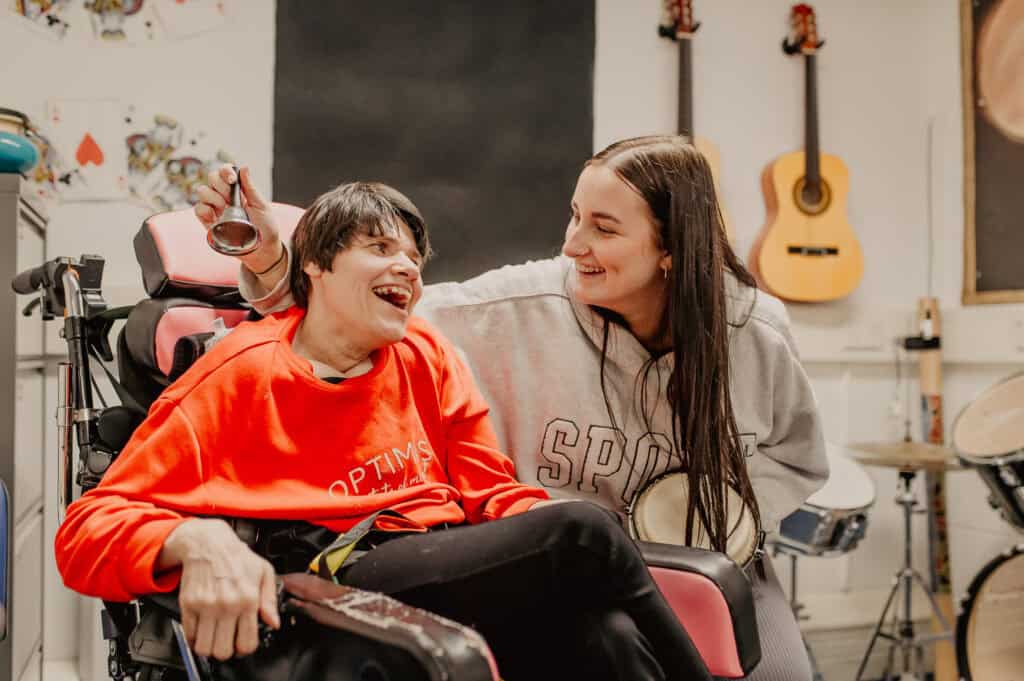
We support disabled people of all ages.
From our free play sessions for children under eight, to our adult residential care services, we’re with disabled people and their families every step of the way.
Get in touch with our team to find out how we could support you.