
Nearly half of all parents fear educational support will be taken away from their disabled children
New research highlights families’ deep concern ahead of government plans to reform the special educational needs and disabilities (SEND) system – with parents fearing the changes could strip away the limited support their children currently receive.
29 January 2026 – Parents of disabled children with the most complex needs say they fear government plans to reform England’s special educational needs and disabilities (SEND) system could strip away the limited support their children currently receive.
New research by national disability charity Sense reveals families are already being failed by the existing system, with nearly half (47%) worried that current support could be reduced further, worsening their situation.
Children and young people who need additional support in nursery, school or college currently access this through the SEND system, by applying for an Education, Health and Care plan (EHCP) which provides a guaranteed, legal right to support. However, families frequently report long delays, inconsistent decisions and costly, adversarial processes – leaving even children with the most complex needs without the help they are entitled to.
Sense’s research*, conducted by Censuswide with 1,000 parents and family carers of disabled children with complex needs**, reveals the scale of the problem. Nearly half (48%) described the process of securing SEND support as stressful, while almost a quarter (22%) said their child’s school was not delivering the legally binding support set out in their EHCP.
The impact on families is severe. Two in five parents (40%) said they had been forced to reduce their working hours due to a lack of appropriate support for their child, while more than a third (35%) had left their job altogether.
Against this backdrop of systemic failure, parents are now deeply concerned about what reform might mean for their children’s future. Half (50%) say they are ‘nervous’ about the upcoming changes, while a third (34%) do not believe politicians have their disabled child’s wellbeing at the heart of decision-making.
The findings come as the government prepares to unveil long-awaited proposals to overhaul the SEND system in the coming weeks. While full details have not yet been published, options reportedly under consideration include removing the legal right to support from some families and shifting responsibility for applying for support from parents to schools.
Families have told Sense they fear these changes could weaken their children’s legal protections and result in further cuts to an already underfunded system.
Sense is calling on ministers to ensure that the needs of disabled children with complex needs are properly understood and fully addressed in any reform of the SEND system. The charity, which is a member of the Disabled Children’s Partnership (DCP), warns that without robust legal rights and adequate funding, vulnerable children risk being left even further behind.
James Watson-O’Neill, chief executive of the national disability charity Sense, said:
“A shocking number of children are being failed by a baffling and underfunded SEND system. Too many are falling through the cracks – at the cost of their happiness, wellbeing and future life chances.
“So it’s little surprise that parents feel deep anxiety and distrust about the upcoming education reforms. If their children’s legal rights are weakened any further or there’s an attempt to cut spending, the consequences could be devastating.
“Instead, the government must listen to families and use this moment to build a properly funded SEND system, where children’s legal rights to education are protected.
“That must include a joined-up workforce strategy and sustained investment in the professionals who support disabled children to learn, so that every child can thrive in the nursery, school or college that is right for them, no matter how complex their needs.”
CASE STUDY: “The ordeal we went through to get Harvey’s EHCP was horrific for our whole family”
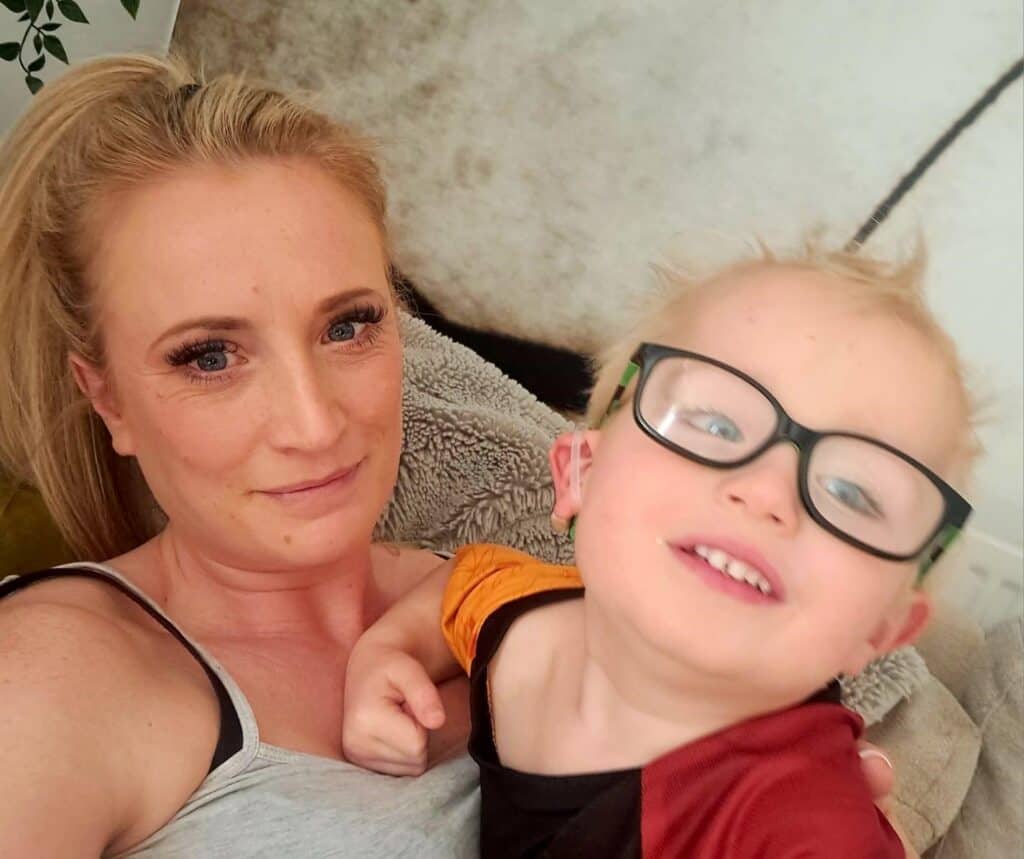
Harvey Hind, who is deafblind, only just turned five this January, but can already count past 1,000 and recite the alphabet forwards and backwards. Since starting a special school for deaf children last September he has thrived.
But Harvey, who lives in North West England with his mum Kimberly Hind, 35, dad Sam Hind, 34, and his two non-disabled big brothers, Thomas, 10, and Max, 8, should have started at his special school’s nursery a full year before that.
Kimberly says he lost the nursery place he was offered from September 2024 while waiting more than a year for an EHCP – far longer than the 20-week legal deadline. Instead, Harvey faced a ‘horrific’ struggle in a mainstream nursery that couldn’t meet his needs.
Harvey has very limited vision and uses bilateral cochlear implants to help him hear. His busy mainstream nursery, filled with other children and noise, was overwhelming for him. Every morning he was due to attend, he became extremely distressed. For three months, he didn’t go in at all.
In the end, Kimberly was forced to give up her full-time job managing a primary school kitchen to focus on Harvey – a major financial hit for her family, left to depend on Sam’s wage as a shift line operative and her £327 monthly carer’s allowance.
The mum had applied for Harvey’s EHCP in plenty of time. After her application was accepted by her local authority in January 2024, a final plan should legally have been issued by mid-June 2024. But Harvey’s draft plan only arrived on 4 December 2024 and the final plan on 13 February 2025.
A multisensory impairment (MSI) children’s specialist from Sense stepped in to support Harvey and train the staff at his mainstream nursery, so he could cope better until he finally switched to his specialist setting. However, Kimberly says Harvey still feels frightened of other children because he experienced so much anxiety.
While recognising that reform is needed, Kimberly is nervous about the changes that might be coming for the SEND system.
Kimberly said:
“I don’t feel confident at all about how the education system might change for disabled children – and this is from actual experience; it’s not just an opinion. You can change anything by law but the local authorities still won’t follow it. They don’t have the staff, the funding or the training.
“I’m nervous there might even be funding cuts. It is very worrying. I’m just relying on Harvey’s school to save him and make sure that, whatever happens, he keeps getting the educational support he needs.
“The ordeal we went through to get Harvey’s EHCP, which he was fully entitled to, was horrific for him and our whole family. Harvey lost his pre-school place at a specialist school because his EHCP took so long and he struggled severely in a mainstream nursery.
“I couldn’t physically make him go in because he was so anxious. He’d make himself sick and try and harm himself – he’d never done that before. And at nursery, he was pulling off the external part of his cochlear implants for the whole day. Normally he loves his implants but I think he was so overwhelmed he didn’t want to hear anything.
“The staff at his mainstream nursery were fab, but nobody there really know what to do because they hadn’t had a child like Harvey before. In the end, we kept him off totally for a few months and I had to stop working. I was at the point of pulling Harvey out of education completely when an MSI specialist at Sense stepped in to help us.
“Now Harvey is at his special school, in a small class of five instead of a big group, he’s like a different child. When he wakes up in the morning the first thing he says to me is ‘Mr Jones’ – that’s his class teacher. He runs out the door to his school taxi and comes back home extremely happy. He’s come on so well cognitively too. Everyone says he’s very bright, especially with maths.
“But the ordeal Harvey went through, when he was missing out on specialist provision, has had lasting effects. He loves adults and he loves his brothers but he’s still frightened of other children and won’t interact with them.
“I think those early years of education are so important and if disabled children with complex needs miss out on them it has an impact for a very, very long time, if not forever.”
ENDS
References:
*The research was conducted by Censuswide, on behalf of Sense.
1,000 UK respondents who are parents/carers of a disabled child with complex needs aged under 18 were surveyed between 14 November to 22 November 2025.
** ‘Complex needs’ was defined in the research as deafblindness or at least two of the following: sensory impairment, a learning disability, autism.
Contact Sense’s media team
For more information, please get in touch with the Sense media team on [email protected] or call 0203 833 0611.
A critical moment for SEND
The Government is expected to set out its plans to reform the special educational needs and disabilities (SEND) system in England soon.