
Creating access for DeafBlind Druids like me
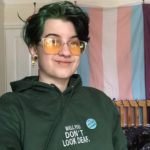
Max Fisher is a multi-award-winning disability advocate, speaker and writer. Max won Sense’s Person of the Year in 2022 and was diagnosed with Visual Snow Syndrome in 2021 after living with it their whole life. They are also Deaf.
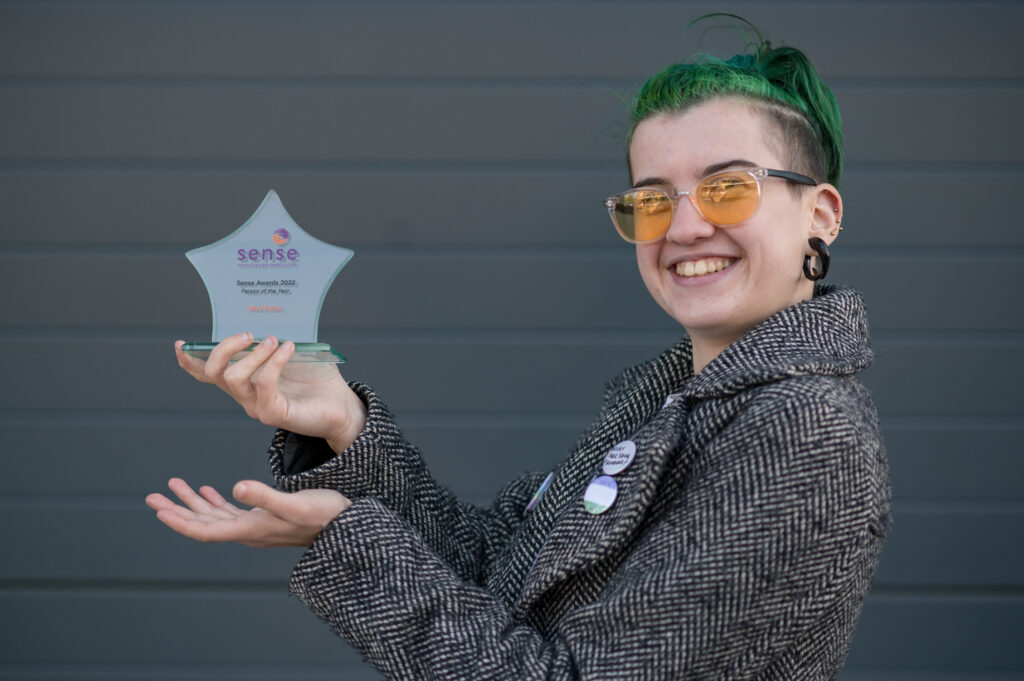
Today, they are helping to break down barriers through their writing and advocacy, including their newly published book ‘Quiet Practice: A DeafBlind Druid’s Guide to Practice without Speech.’
To celebrate Disability Pride Month, Max shares how finding Druidry helped them move from feeling isolated to finding a community where they belong.
Feeling different
For as long as I can remember, I have felt different. My green hair and orange lenses make me stand out in crowds, and I catch people staring.
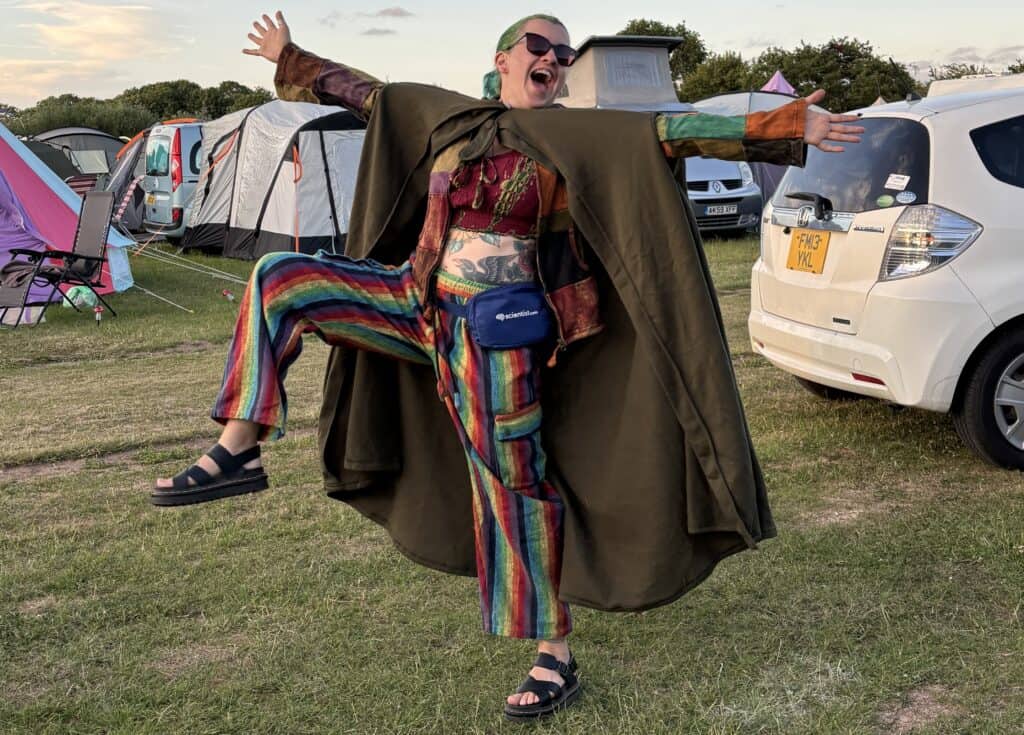
I was one of the first people in my year to come out as being LGBT and was often bullied for not fitting in.
Everything I’ve ever seen has been covered in a thick layer of visual snow. I’ve never seen a plain white piece of paper, and my hearing loss wasn’t diagnosed until I was in my early 20s.
Being a druid was no different. But I am proud to be an oddball.
Why Druidry?
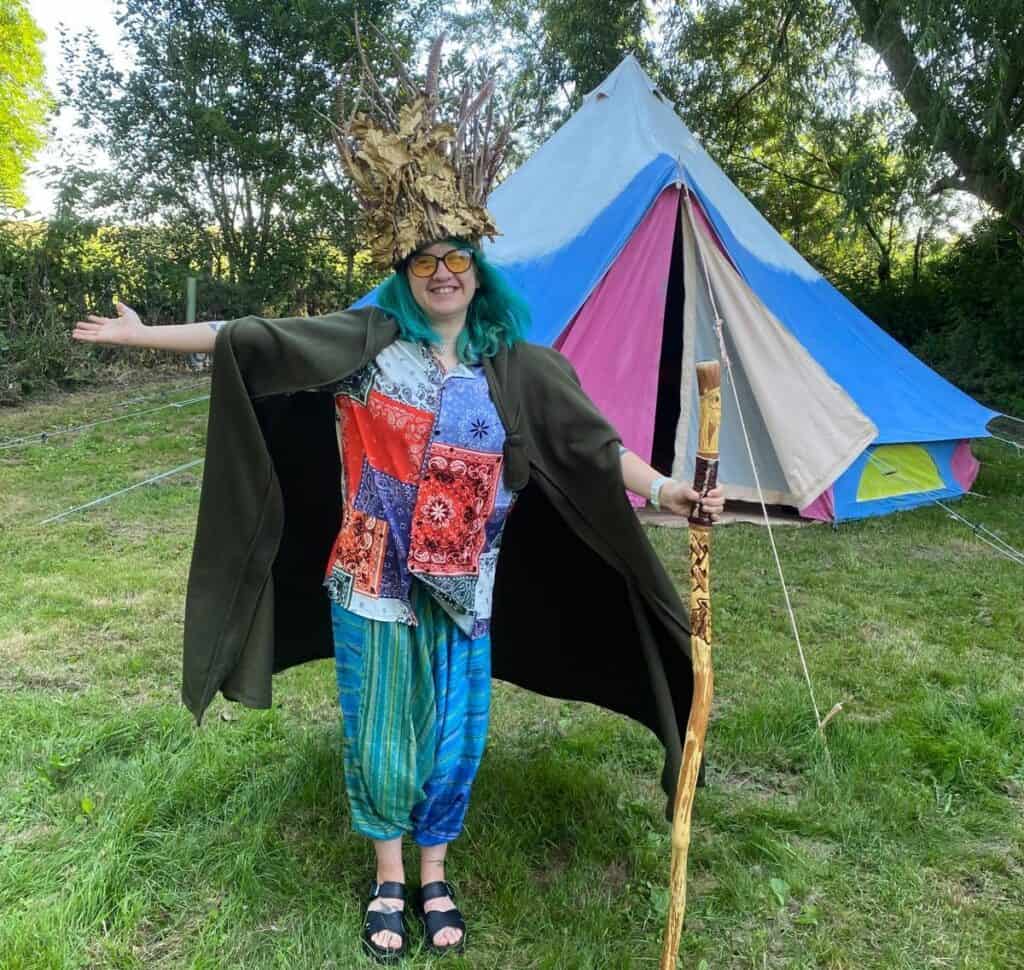
Druidry is a nature-based spiritual tradition, but more importantly for people like me, who are DeafBlind, it is a multi-sensory experience.
- We use incense, oils, and candles to engage our noses.
- We make offerings of food and drink, which engage our taste buds.
- We often have a fire whose warmth we can feel on our skin.
- We will sing, play music, and listen to instruments for our ears.
- And when you’re not speaking, there’s something to read, and plenty to look at.
People who follow it, known as Druids, seek a deeper connection with nature, the seasons and the world around them.
When I came to Druidry, I felt at home. In these communities, difference is welcomed and celebrated. 15 years of experience in this community have shown me how much it loves, values, and celebrates its disabled members.
But it does not always know how best to include us!
The barriers faced
Even in the most inclusive of spaces, there is the assumption, and thus the requirement, for speaking. It’s more than just a spiritual issue. I find that people don’t know how to have a basic conversation with me when speech is an obstacle.
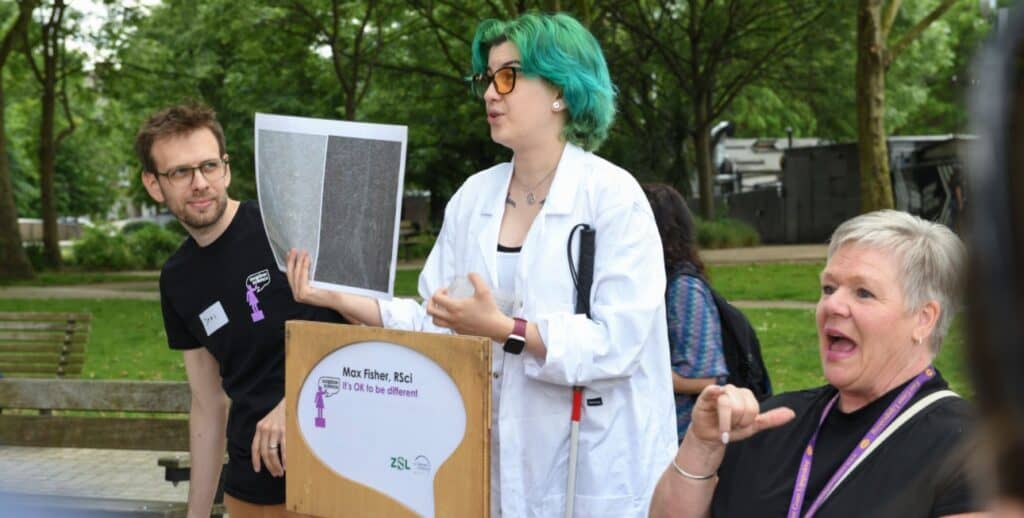
When I was younger, all the books I read on Druidry instructed me to speak.
I used to be quite shy and nervous about other people hearing me, so I didn’t want to speak in case I drew attention to myself. Then, when I became DeafBlind, I realised that listening to speech also held challenges.
I have had people tell me during ritual, “We’ll do this bit, you just relax and enjoy it”, but how can I enjoy it when I have no idea what is happening?
I have had to sit and wait for it to be over, no magic felt, no worship given. It feels like people are happy for people like me to be there passively, but there needs to be a way for us to be an active participant too.
Driving social change
There are books upon books about incorporating the senses alongside speech.
But what if, like me, speaking is the problem?
Having nothing to turn to can make you feel isolated, alone, and scared. It can make you question what is wrong with you. But there is nothing wrong with wanting to be included!
So I wrote a book to make sure no one had to feel this way.
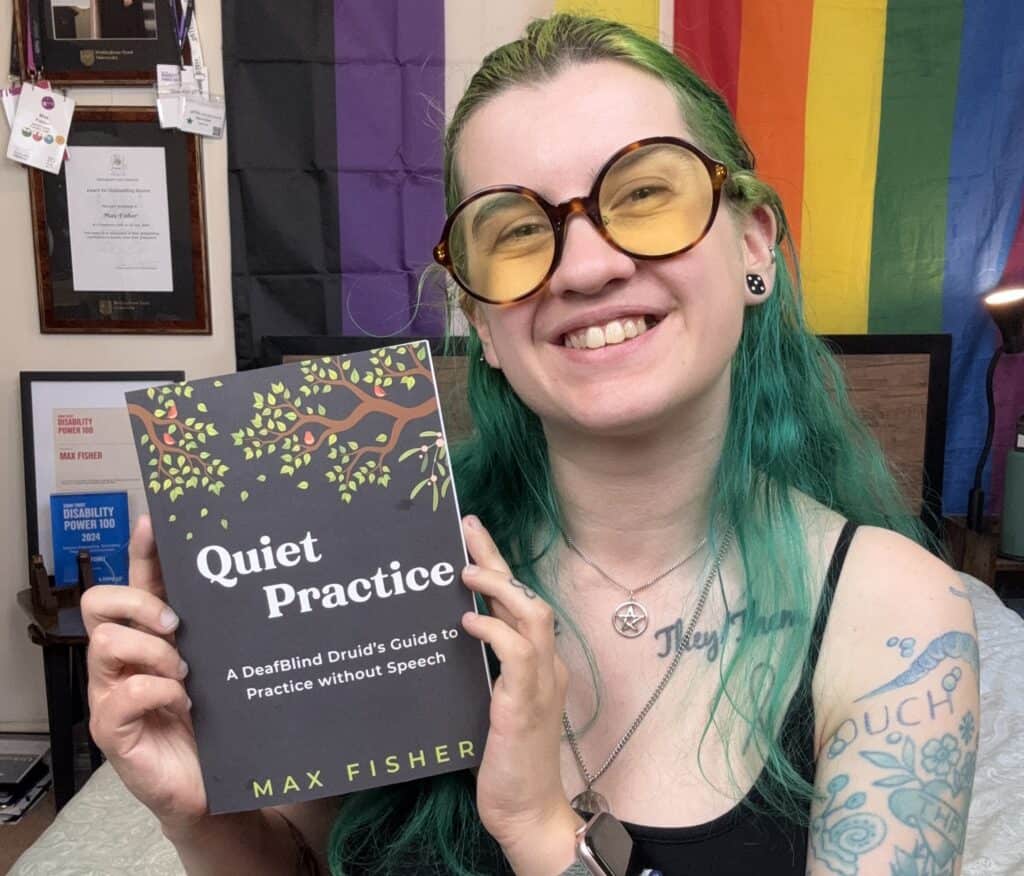
I’ve always felt more confident doing things I can read about. Until now, no such book existed.
I have had groups tell me they are not accessible to me because they don’t know how to make accommodations, but now there is no excuse!
I am no stranger to creating my own access. I have spent over half my life as an activist and an advocate, and I regularly give talks and run workshops about intersectionality and accessibility.
People don’t know how to provide access until they are taught, or until they see it in action.
I wrote this book to make it less scary. Just because it can be scary doesn’t mean we don’t belong there. I also wanted people who struggle with speech in ritual to feel less alone.
My book
My book, ‘Quiet Practice: A DeafBlind Druid’s Guide To Practice Without Speech’, brings together familiar druid practices, with the unfamiliar art of not speaking.
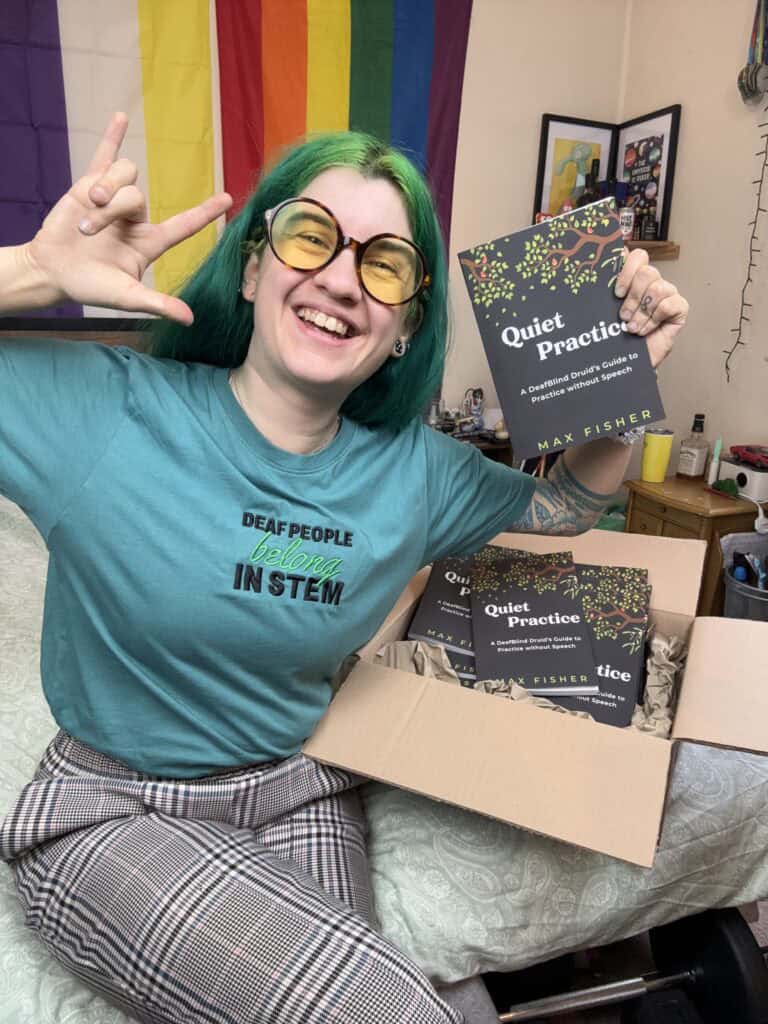
Everybody deserves to feel at home in Druidry, and not being able or willing to speak is not a valid reason to be excluded. Quiet Practice teaches people to help and support each other and provide access for all druids, in whatever way they can.
Disabled people deserve to have faith. Disabled people belong in spiritual spaces as active participants. Disabled people belong in faith.